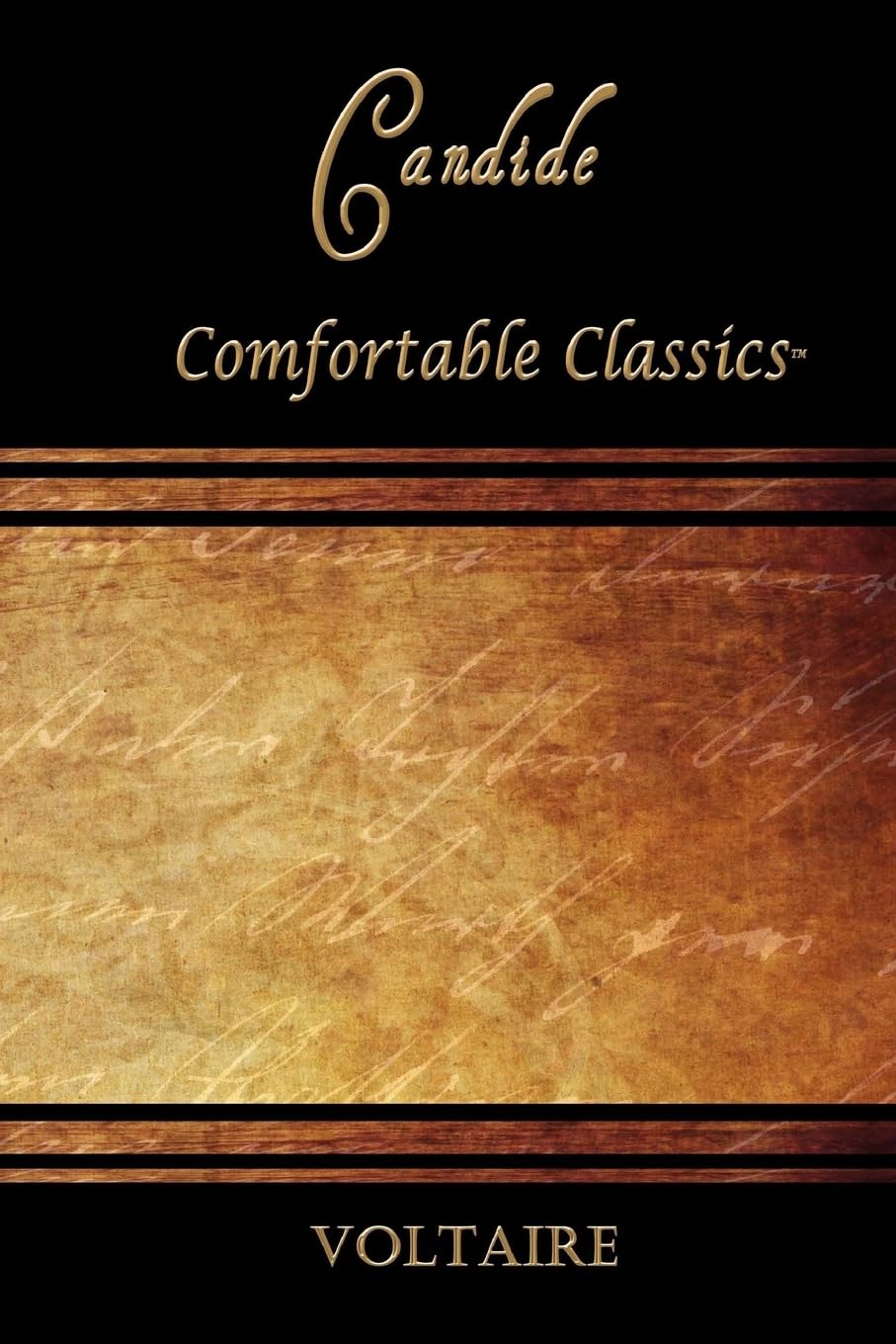
 Comfortable ClassicsComfortable Classics
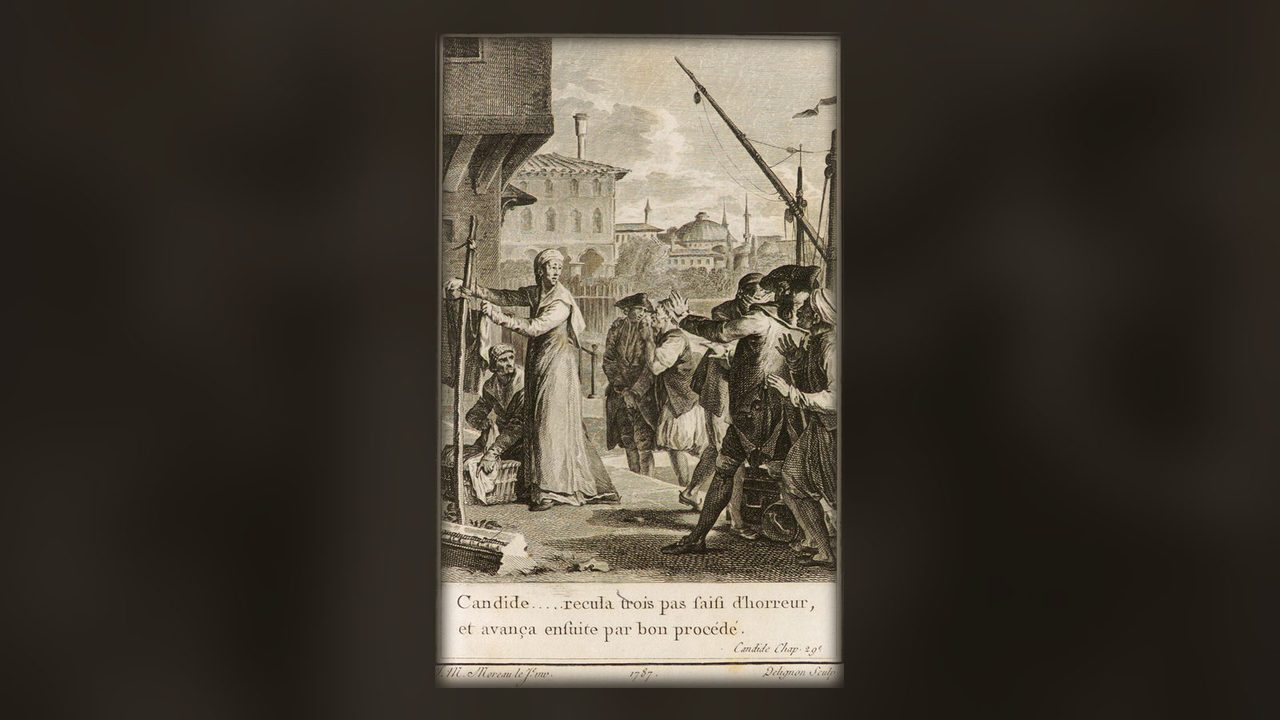
Is this really the best of all possible worlds? Published in 1759, Candide is Voltaire's dazzling answer: a wildly funny, fast-paced, and razor-sharp satire that skewers blind optimism and is still one of the most entertaining books of the Enlightenment.
Young Candide grows up in the castle of a German baron, where he is taught by the philosopher Pangloss that everything happens for the best. Then he is caught kissing the baron's beautiful daughter, Cunégonde, and is kicked out of the castle. So begins a whirlwind of catastrophe. Candide is forced into an army, flogged, shipwrecked, and caught in the great Lisbon earthquake. He sees the Inquisition at work, crosses the ocean to South America, stumbles into the golden land of El Dorado, and loses fortunes as quickly as he finds them. Along the way he meets a cast of unforgettable companions, including the loyal servant Cacambo, the gloomy scholar Martin, and an old woman with a tale of misfortune to top them all. Through every disaster Pangloss insists that all is for the best, and Candide keeps trying to believe him.
Voltaire, the pen name of François-Marie Arouet, was one of the most brilliant and outspoken thinkers of eighteenth-century France. He wrote Candide partly in response to the 1755 Lisbon earthquake, which killed tens of thousands and made many people question the popular philosophy that a good and wise order guided every event. The book was so daring in its attacks on war, religious intolerance, slavery, and the abuses of power that it was quickly banned in many places, and it became a bestseller anyway.
Candide moves at breakneck speed, with chapters only a few pages long. Its humor is outrageous, but its questions are serious: How should we live in a world full of suffering? What can we actually do about it? Voltaire's famous final advice has become one of the most quoted lines in literature. The book includes satirical violence and mature situations suited to older readers.
Comfortable Classics was created to help families build a library worth keeping. Each book in the series shares the same handsome design, a black cover with warm wood-grain bands and a parchment panel. Only the title lettering changes, chosen to suit each book's spirit. Together they make a matching collection that looks beautiful on a shelf and invites you to take the next one down.
Classics meant to be kept, studied, and handed down.
Voltaire ends his story with simple, hard-won advice to carry through life. Read it with an older student or a friend who enjoys a good argument.
Part of the Comfortable Classics series. Collect the matching set.