 Comfortable ClassicsComfortable Classics
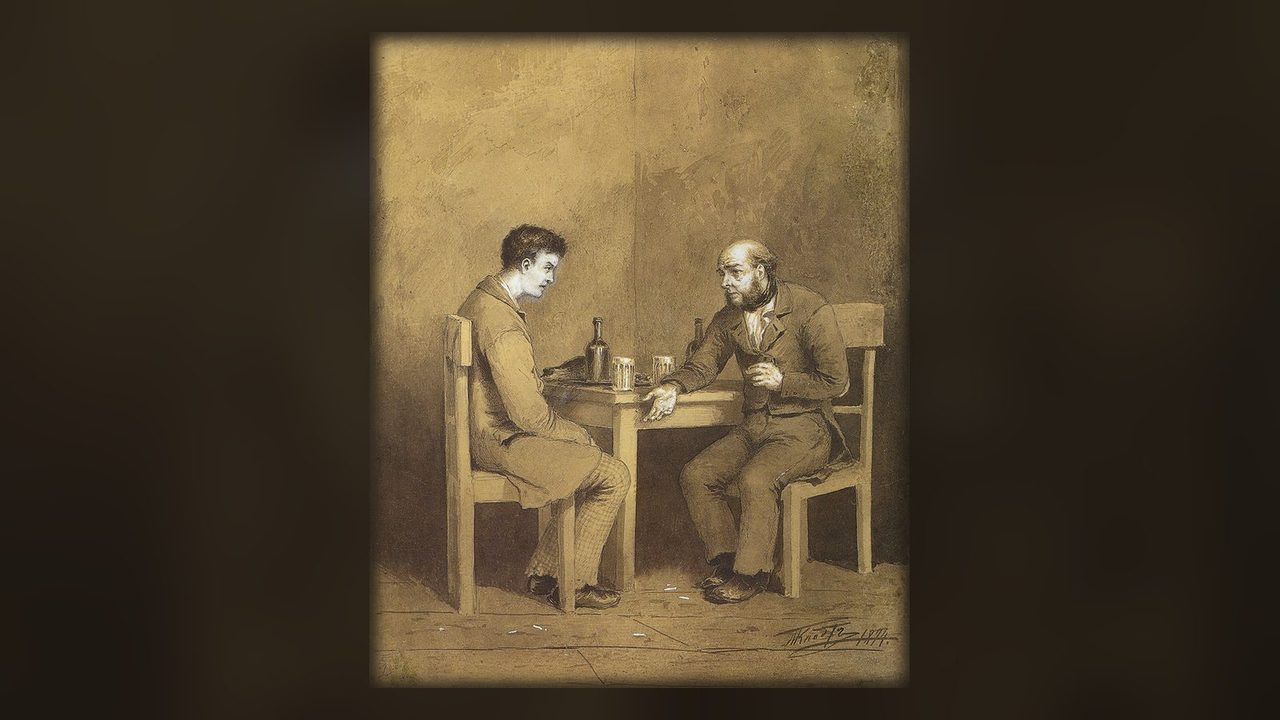
A young man paces a tiny, coffin-like room in the sweltering heat of St. Petersburg, turning a terrible idea over and over in his mind. First published in 1866, Crime and Punishment is Fyodor Dostoyevsky's gripping psychological masterpiece and one of the greatest novels ever written.
Rodion Raskolnikov is a former law student, proud, brilliant, and desperately poor. He has convinced himself of a dangerous theory: that certain extraordinary people are above ordinary morality and have the right to cross any line for a higher purpose. To test it, and to escape his poverty, he decides to murder a greedy old pawnbroker. Early in the novel, he commits the crime. The real story is what follows.
Raskolnikov falls into fever and torment. He wanders the city, raving, hiding, and nearly confessing again and again. Around him swirls a vivid cast: his devoted mother and his sister Dounia, who is about to marry a man she does not love to save the family; his loyal friend Razumihin; the drunken clerk Marmeladov and his gentle daughter Sonia, who has sacrificed everything for her family; the mysterious and sinister Svidrigailov; and Porfiry Petrovich, the shrewd detective who plays a patient cat-and-mouse game with the young murderer. As the pressure builds, Raskolnikov must face the question at the heart of the book: can a person escape his own conscience?
Dostoyevsky wrote from deep experience. As a young man he was arrested for joining a radical circle, sentenced to death, and reprieved at the last moment, then spent four years in a Siberian prison camp. That ordeal transformed his faith and his understanding of suffering, guilt, and redemption. Crime and Punishment is part thriller, part philosophy, and part spiritual journey, and its portrait of a mind in crisis remains astonishingly modern.
Comfortable Classics was created to help families build a library worth keeping. Each book in the series shares the same handsome design, a black cover with warm wood-grain bands and a parchment panel. Only the title lettering changes, chosen to suit each book's spirit. Together they make a matching collection that looks beautiful on a shelf and invites you to take the next one down.
Classics meant to be kept, studied, and handed down.
Dostoyevsky believed suffering and love could lead a person back to life. Read it with a thoughtful teen or a friend and wrestle with its questions together.
Part of the Comfortable Classics series. Collect the matching set.