 Comfortable ClassicsComfortable Classics
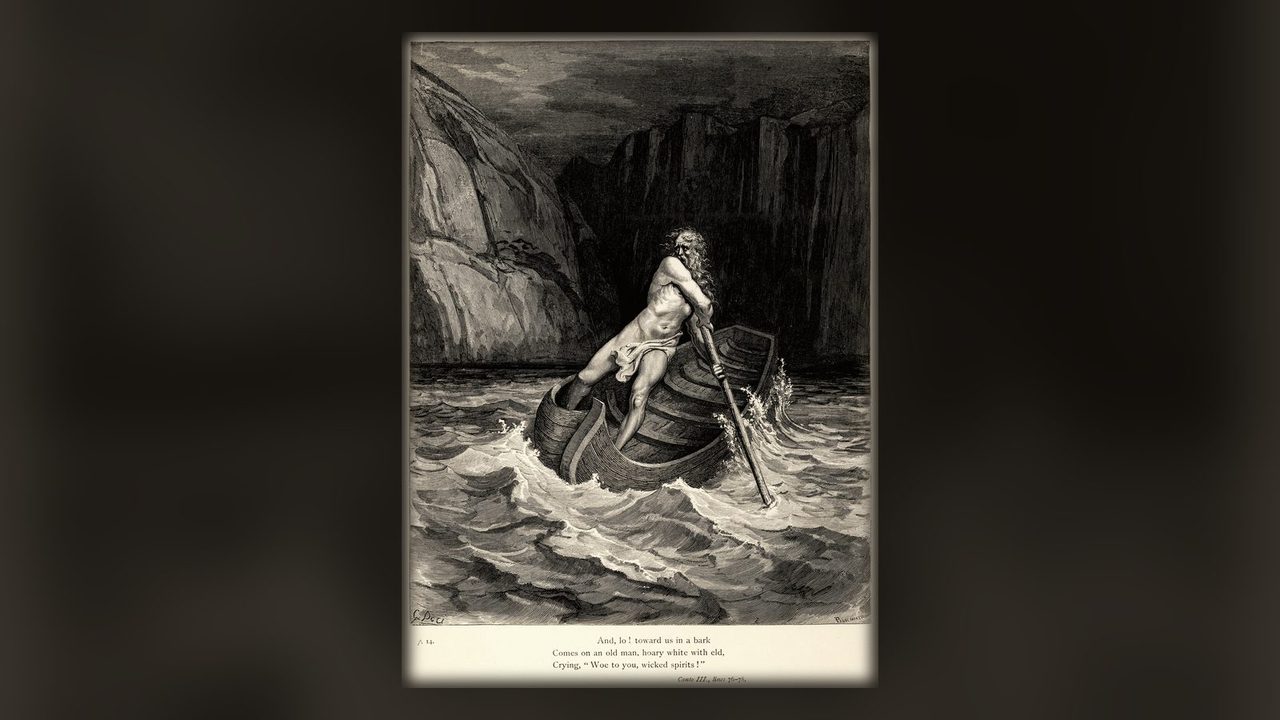
"Midway upon the journey of our life, I found myself within a forest dark, for the straightforward pathway had been lost." So begins Inferno, the first part of Dante Alighieri's Divine Comedy, and one of the most famous journeys in all of literature.
Written in the early fourteenth century, the poem opens on the night before Good Friday in the year 1300. Dante, lost and afraid, is blocked by three wild beasts. Then help arrives: the spirit of Virgil, the great Roman poet, sent at the request of Beatrice, the woman Dante loved. To find his way to salvation, Virgil tells him, Dante must first pass through Hell itself.
Beneath a gate inscribed "Abandon all hope, ye who enter here," the two poets descend through nine circles, each holding sinners punished in a way that fits their sins. Lustful lovers are swept forever in a howling wind. Gluttons lie in freezing filth. The angry fight in a muddy swamp, and heretics burn in fiery tombs. Deeper still lie the violent, the frauds, and the traitors, down to the frozen lake at the very center of the earth, where Satan himself waits. Along the way Dante meets famous figures from history, myth, and his own Florence, including the tragic lovers Paolo and Francesca and the restless voyager Ulysses.
Dante was a poet and politician in Florence who was exiled from his beloved city in 1302 and never allowed to return. He wrote the Comedy in exile, in the everyday Italian of his time rather than Latin, so that ordinary people could read it. In doing so he helped create the Italian language. His vision of Hell has shaped art, literature, and the popular imagination for seven centuries, inspiring painters like Botticelli and Doré, writers like Milton and T.S. Eliot, and countless modern stories.
The Inferno is vivid, terrifying, and deeply human. Beneath its horrors lies a story of hope: a lost man finding his way back toward the light.
Comfortable Classics was created to help families build a library worth keeping. Each book in the series shares the same handsome design, a black cover with warm wood-grain bands and a parchment panel. Only the title lettering changes, chosen to suit each book's spirit. Together they make a matching collection that looks beautiful on a shelf and invites you to take the next one down.
Classics meant to be kept, studied, and handed down.
Dante's journey is made with a wise guide at his side. Read the Inferno with an older student and be their Virgil through its darkest circles.
Part of the Comfortable Classics series. Collect the matching set.