 Comfortable ClassicsComfortable Classics
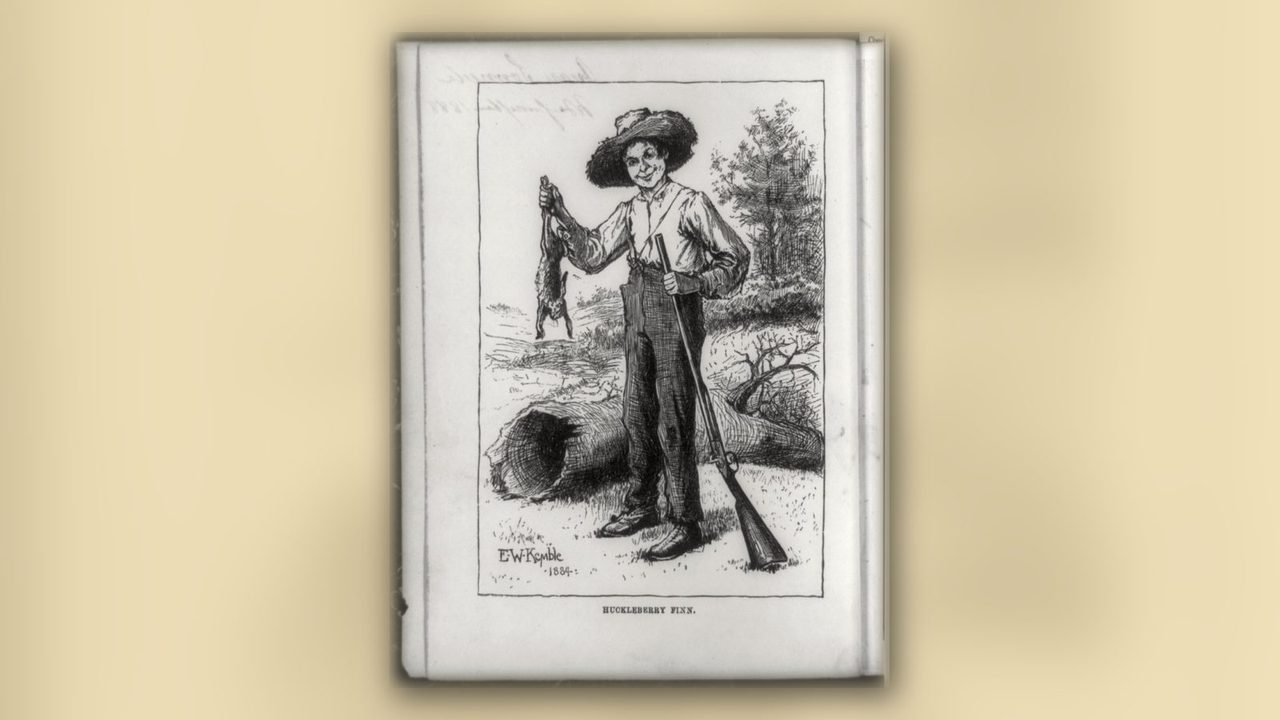
"All modern American literature comes from one book by Mark Twain called Huckleberry Finn," Ernest Hemingway once wrote. First published in 1884 in Britain and in 1885 in the United States, The Adventures of Huckleberry Finn is a funny, daring, and deeply moving journey down the Mississippi River, and one of the most important novels America has produced.
Huck Finn, the ragged, free-spirited friend of Tom Sawyer, has been taken in by the Widow Douglas, who is determined to "sivilize" him. But when his violent, drunken father returns and carries him off to a cabin in the woods, Huck fakes his own death and escapes to Jackson's Island. There he meets Jim, a man enslaved by the widow's sister, who has run away after learning he is about to be sold down the river and separated from his family.
Together they set off on a raft, drifting south through the summer nights. Along the river they meet feuding families, lynch mobs, swindlers calling themselves a duke and a king, and town after town full of hypocrisy and foolishness. Through it all, Huck wrestles with what he has been taught is right, that helping Jim escape is a sin, and what his own heart tells him about the friend beside him. His decision is one of the great moral turning points in literature.
Told entirely in Huck's own voice, in the rich vernacular of the Mississippi Valley, the novel was revolutionary in its day. Twain, who grew up in the river town of Hannibal, Missouri, captured American speech as no writer had before. He set the story in the years before the Civil War and used humor and satire to expose the cruelty of slavery and racism. The book contains the racial language of its time, and it has been both celebrated and challenged ever since, which makes it a powerful book for honest discussion.
Comfortable Classics was created to help families build a library worth keeping. Each book in the series shares the same handsome design, a black cover with warm wood-grain bands and a parchment panel. Only the title lettering changes, chosen to suit each book's spirit. Together they make a matching collection that looks beautiful on a shelf and invites you to take the next one down.
Classics meant to be kept, studied, and handed down.
Huck learns that doing right can mean questioning what the adults around him believe. Read it with a teenager and talk honestly about its history and its hard questions.
Part of the Comfortable Classics series. Collect the matching set.