 Comfortable ClassicsComfortable Classics
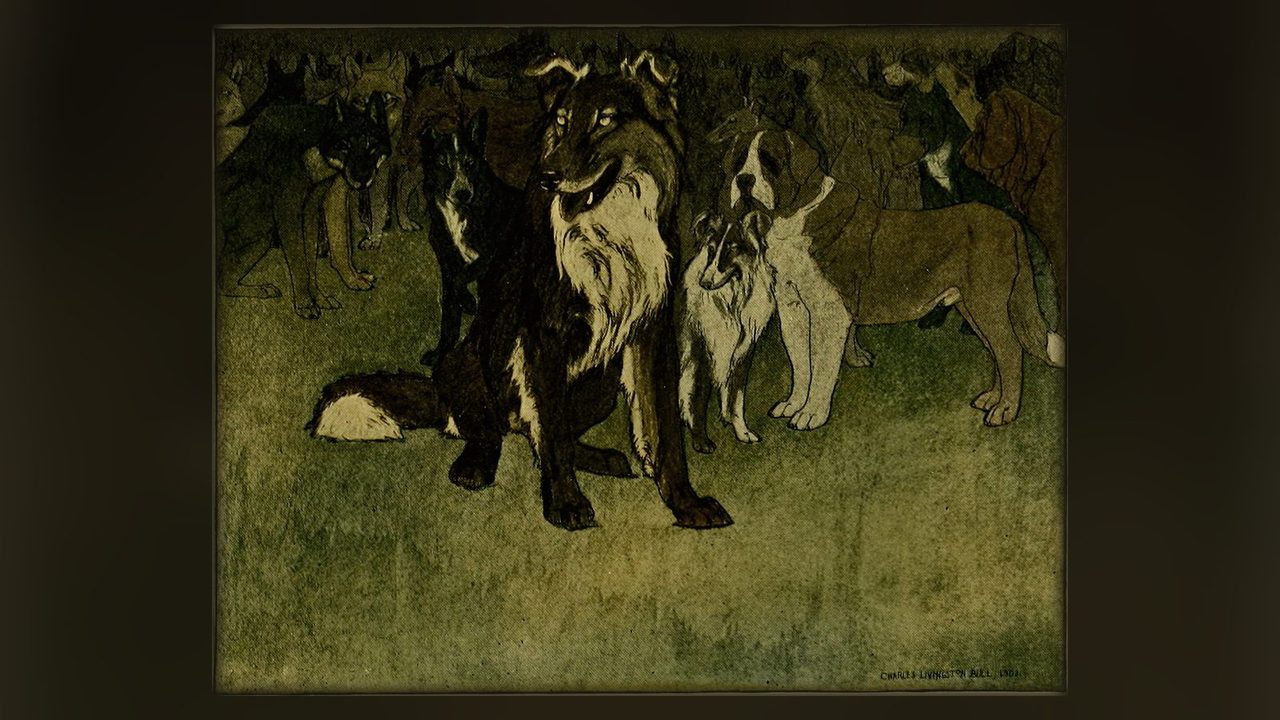
"Buck did not read the newspapers, or he would have known that trouble was brewing." With that famous opening line, Jack London begins one of the most gripping animal stories ever written. Published in 1903, The Call of the Wild made London famous almost overnight and has thrilled readers ever since.
Buck is a big, proud dog, part St. Bernard and part Scotch shepherd, living a comfortable life on Judge Miller's sunny estate in California's Santa Clara Valley. But it is 1897, gold has been discovered in the Klondike, and men rushing north to the Yukon need strong dogs to pull their sleds. One night a gardener who owes gambling debts steals Buck and sells him. Within days, Buck is shipped to the frozen North and thrown into a brutal new world.
There he learns "the law of club and fang." He is beaten by a man in a red sweater, watches a gentle dog torn apart by the pack, and discovers that survival depends on strength, cunning, and endurance. Harnessed to a mail sled, he learns to dig a bed in the snow, steal food, and fight. A fierce rivalry grows between Buck and Spitz, the lead dog. Passed from owner to owner, some capable and some foolish and cruel, Buck finally finds a master he loves in John Thornton. Yet all the while, something ancient is stirring in him, a voice calling from the forest.
London knew this world firsthand. In 1897 he joined the Klondike Gold Rush himself and spent a hard winter in the Yukon. His writing is lean, powerful, and vivid, full of snow, hunger, and wild beauty. Beneath the adventure, the novel explores big ideas about nature, civilization, loyalty, and what lies beneath the surface of every living thing. Some scenes depict the harshness of the trail honestly, so younger readers may want a grown-up nearby.
Comfortable Classics was created to help families build a library worth keeping. Each book in the series shares the same handsome design, a black cover with warm wood-grain bands and a parchment panel. Only the title lettering changes, chosen to suit each book's spirit. Together they make a matching collection that looks beautiful on a shelf and invites you to take the next one down.
Classics meant to be kept, studied, and handed down.
Buck's story is about answering the voice of his ancestors. Read it with a young reader who loves dogs and adventure, and talk about loyalty and courage.
Part of the Comfortable Classics series. Collect the matching set.