 Comfortable ClassicsComfortable Classics
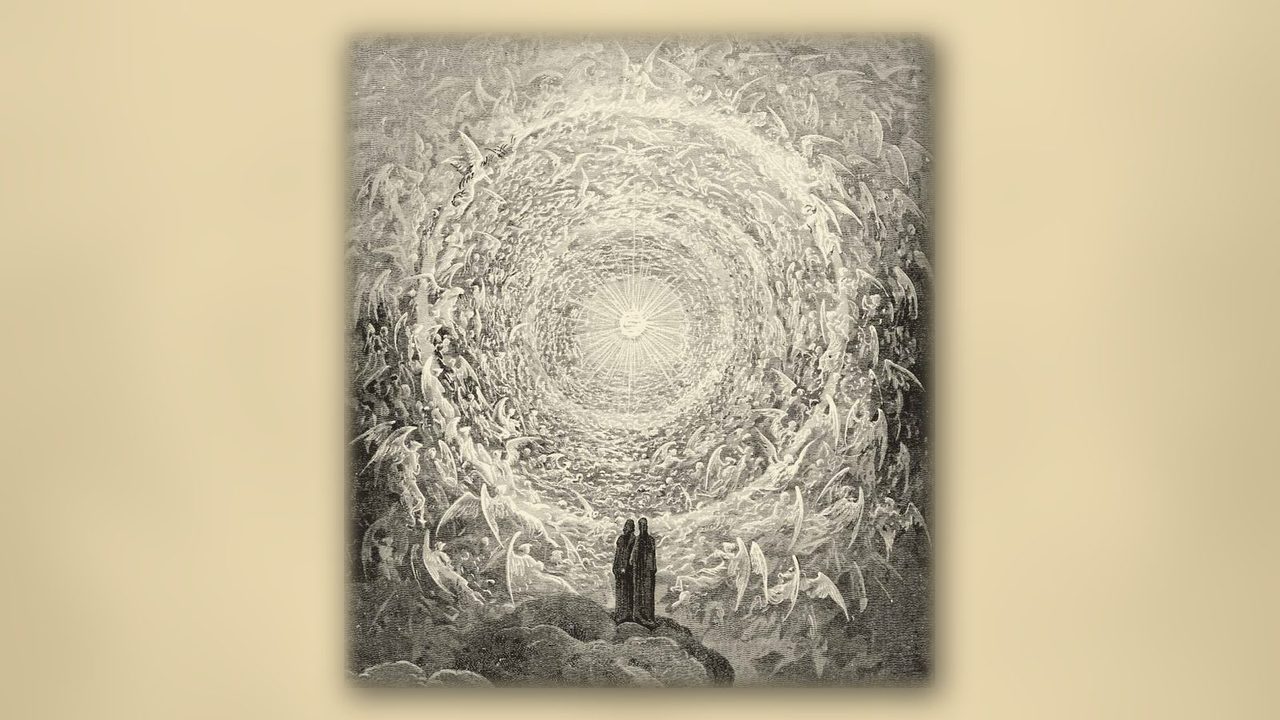
Completed around 1320, shortly before its author's death, The Divine Comedy is one of the supreme achievements of human imagination: a single poem that journeys through Hell, climbs the mountain of Purgatory, and rises through the heavens to the very presence of God.
The poem begins on the night before Good Friday in the year 1300. Dante, midway through life, finds himself lost in a dark wood. The spirit of the Roman poet Virgil appears to guide him, sent by Beatrice, the woman Dante loved and lost, who now dwells in Heaven.
In the Inferno, Dante and Virgil descend through the nine circles of Hell, where sinners suffer punishments that mirror their sins, from the lovers swept in an endless storm to the traitors frozen in ice at the center of the earth. In the Purgatorio, the travelers emerge beneath the stars and climb a great mountain where souls joyfully work to be cleansed of their faults, singing as they go. At the summit, in the Earthly Paradise, Beatrice herself appears. In the Paradiso, she leads Dante upward through the spheres of the heavens, where he meets saints and teachers of the faith and learns about love, wisdom, and divine order, until he reaches a final vision of "the love that moves the sun and the other stars."
Dante called his poem a "comedy" because it moves from darkness to joy and because he wrote it in Italian, the language of ordinary people, rather than Latin. He wrote it while in bitter exile from his native Florence, and he filled it with real people, popes, kings, poets, and neighbors, so that it is also a vast portrait of medieval Europe. Its one hundred cantos are built with remarkable care, and it helped establish the Italian language itself.
For seven centuries the Comedy has inspired painters, poets, composers, and believers. Chaucer, Milton, Longfellow, and T.S. Eliot all honored it. It remains a profound meditation on sin, grace, love, and the soul's longing for God.
Comfortable Classics was created to help families build a library worth keeping. Each book in the series shares the same handsome design, a black cover with warm wood-grain bands and a parchment panel. Only the title lettering changes, chosen to suit each book's spirit. Together they make a matching collection that looks beautiful on a shelf and invites you to take the next one down.
Classics meant to be kept, studied, and handed down.
Dante's pilgrim is guided first by a teacher and then by love. Read it slowly, a canto at a time, with an older student or a reading group.
Part of the Comfortable Classics series. Collect the matching set.