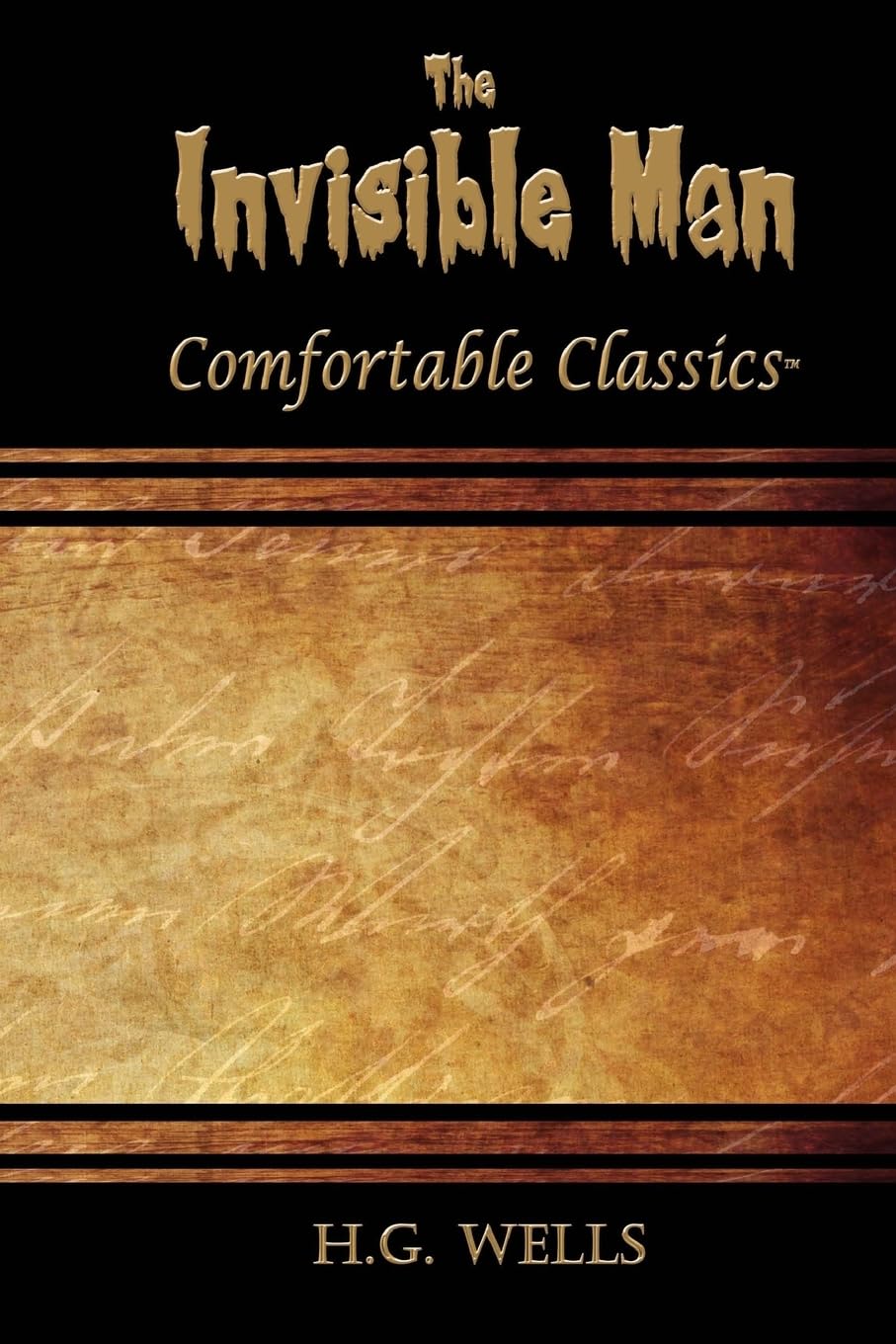
 Comfortable ClassicsComfortable Classics
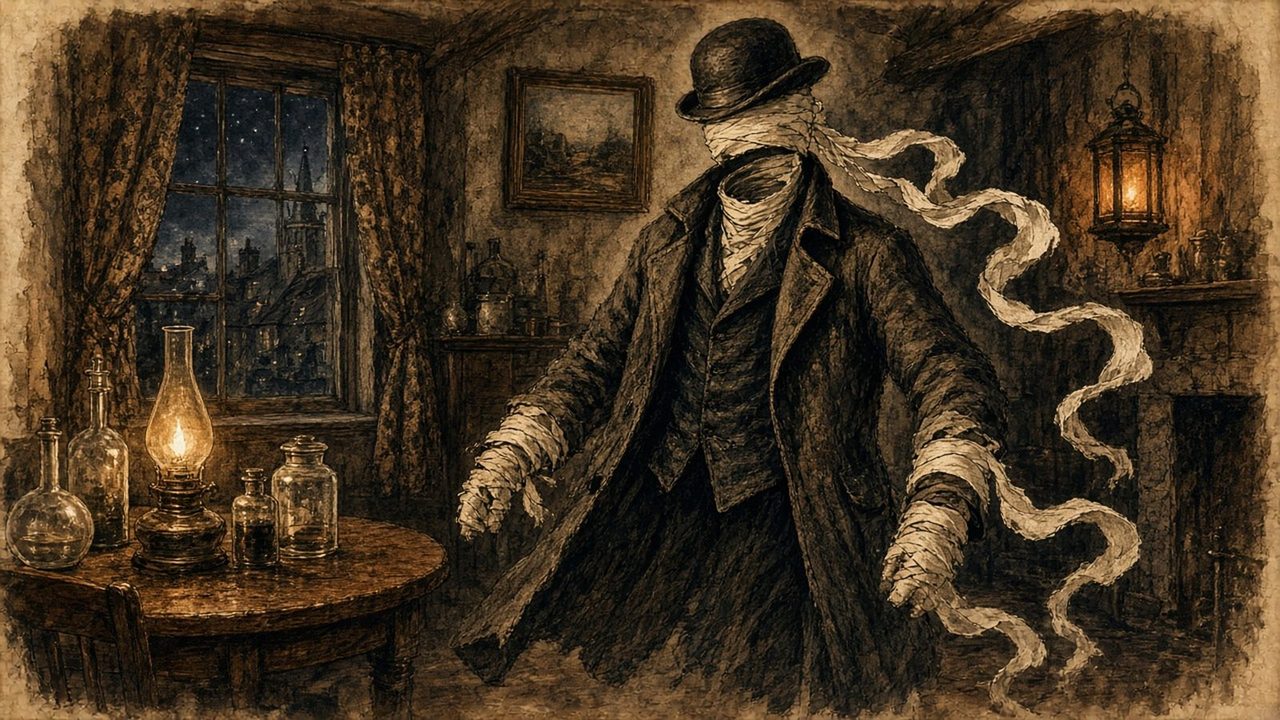
On a snowy February day, a stranger stumbles into the Coach and Horses inn in the English village of Iping. He is wrapped from head to toe in bandages, with a hat pulled low, dark goggles, and a false pink nose. He wants a room, a fire, and to be left entirely alone. Published in 1897, H. G. Wells's The Invisible Man is a gripping, darkly funny tale of science gone wrong, and one of the founding classics of science fiction.
The villagers are curious, then suspicious. The stranger works day and night with bottles and chemicals and flies into rages at the slightest interruption. Strange things begin to happen: money disappears, footsteps are heard in empty rooms, and furniture seems to move on its own. When the landlady finally confronts him, the stranger unwraps his bandages to reveal nothing at all underneath.
He is Griffin, a brilliant young scientist who has discovered how to make himself invisible. But he has not discovered how to become visible again. Invisibility, which he imagined would bring him power and freedom, has instead brought cold, hunger, and constant danger. Pursued by angry villagers, desperate and increasingly ruthless, Griffin turns to an old acquaintance, Dr. Kemp, and reveals a terrifying plan.
Wells, often called one of the fathers of science fiction, wrote this novel in the same remarkable burst of creativity that produced The Time Machine and The War of the Worlds. Trained in science under the biologist T.H. Huxley, he used fantastic premises to explore real questions about science, morality, and society. In Griffin he created a chilling portrait of a gifted mind corrupted by isolation and the temptation of unchecked power.
The story moves quickly, mixing comedy, suspense, and horror. It has inspired films, television series, and countless imitations, and the idea of the invisible man has become part of popular culture.
Comfortable Classics was created to help families build a library worth keeping. Each book in the series shares the same handsome design, a black cover with warm wood-grain bands and a parchment panel. Only the title lettering changes, chosen to suit each book's spirit. Together they make a matching collection that looks beautiful on a shelf and invites you to take the next one down.
Classics meant to be kept, studied, and handed down.
Griffin's story asks what you would do if no one could see you. Read it with a curious teen and talk about character and responsibility.
Part of the Comfortable Classics series. Collect the matching set.