 Comfortable ClassicsComfortable Classics

The year is 1757. In the deep forests of upstate New York, Britain and France are locked in the French and Indian War, each with Native allies, fighting for control of North America. Published in 1826, James Fenimore Cooper's The Last of the Mohicans plunges readers into that wild, dangerous frontier, and it became one of the most popular American novels of the nineteenth century.
Two young sisters, the fair, gentle Alice and the dark-haired, brave Cora Munro, set out through the wilderness to join their father, Colonel Munro, commander of the besieged British Fort William Henry. They are escorted by the young Major Duncan Heyward, a psalm-singing music teacher named David Gamut, and a Native runner named Magua, who claims to know a shortcut. But Magua has his own secret grievance against Colonel Munro.
When the party is led astray, they are rescued by three remarkable men: the frontier scout Hawkeye, also called Natty Bumppo, a white man raised among the Delaware with his famous long rifle; his friend Chingachgook, a Mohican chief; and Chingachgook's son, Uncas, the last of his people. What follows is a breathless series of ambushes, captures, escapes, and pursuits through forests, caves, rivers, and waterfalls, set against the real siege of Fort William Henry. Hawkeye and his companions must use every skill of the wilderness to protect the sisters, while Magua pursues his revenge.
Cooper, who grew up in the frontier village his father founded, Cooperstown, New York, was one of the first great American novelists. This is the second of his five Leatherstocking Tales featuring Natty Bumppo. His vivid descriptions of the American wilderness and his sense of a vanishing world helped shape the adventure story and the legend of the frontier. The novel reflects the attitudes and stereotypes of its time in its depictions of Native peoples, which makes it a rich book for thoughtful discussion of history.
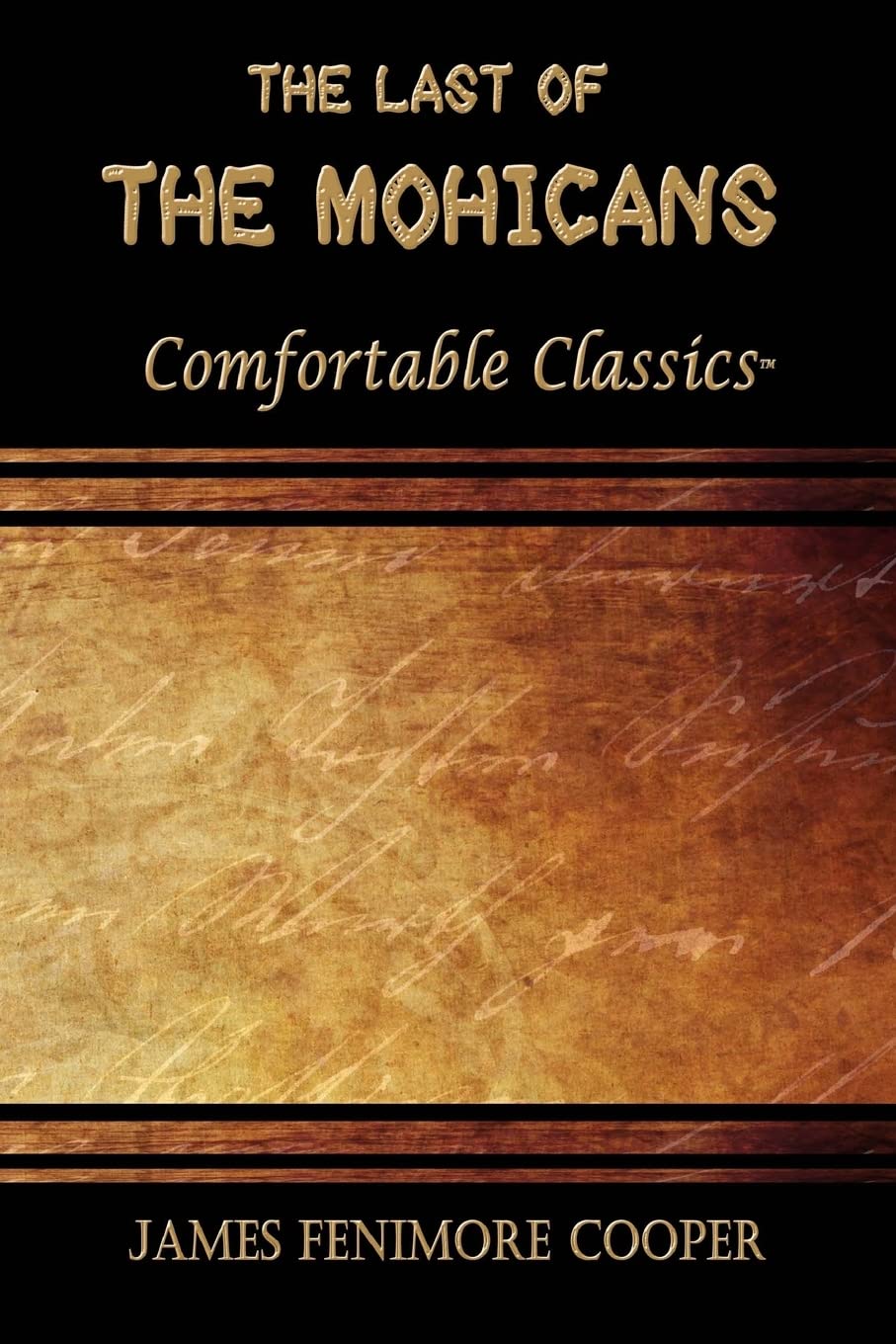
Comfortable Classics was created to help families build a library worth keeping. Each book in the series shares the same handsome design, a black cover with warm wood-grain bands and a parchment panel. Only the title lettering changes, chosen to suit each book's spirit. Together they make a matching collection that looks beautiful on a shelf and invites you to take the next one down.
Classics meant to be kept, studied, and handed down.
Cooper wrote of a world that was passing away. Read it with a young history lover and talk about the real events and peoples behind the story.
Part of the Comfortable Classics series. Collect the matching set.