 Comfortable ClassicsComfortable Classics
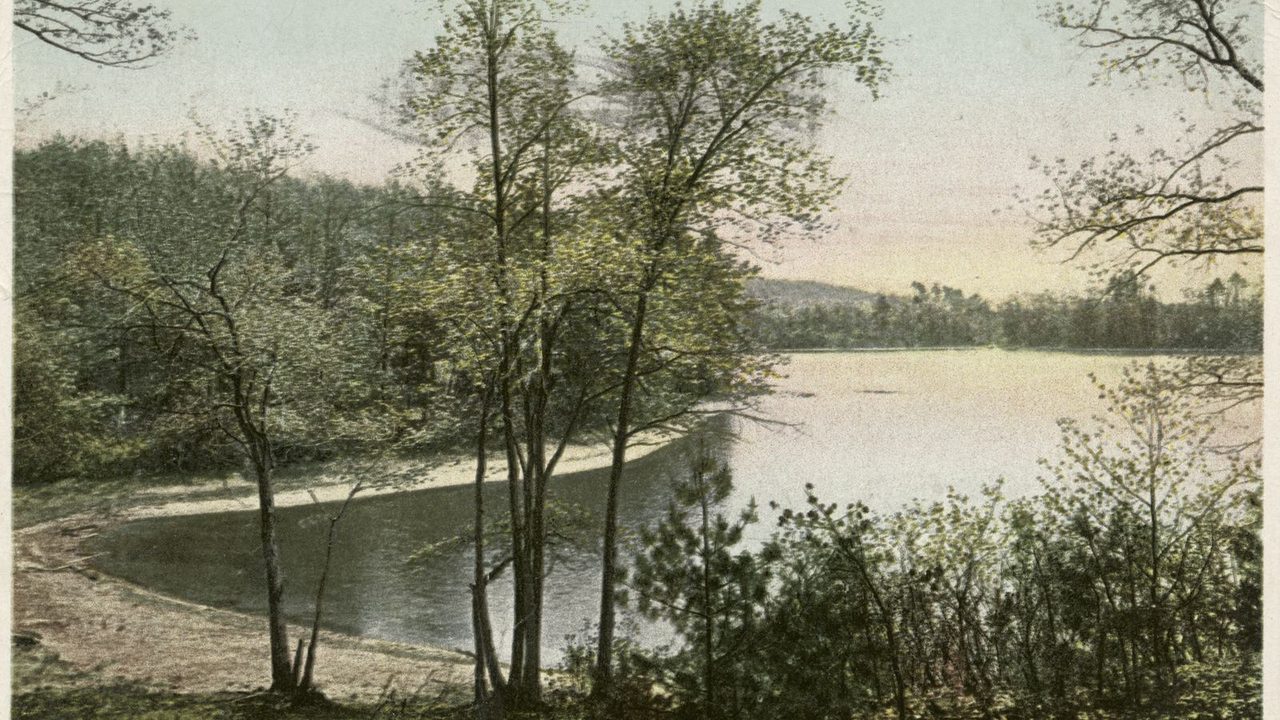
"I went to the woods because I wished to live deliberately, to front only the essential facts of life, and see if I could not learn what it had to teach." With those words, Henry David Thoreau explained one of the most famous experiments in American history. Published in 1854, Walden; or, Life in the Woods is his account of the two years, two months, and two days he spent living in a small cabin he built himself near Walden Pond, outside Concord, Massachusetts.
On July 4, 1845, Thoreau moved into his one-room cabin on land owned by his friend and mentor Ralph Waldo Emerson. He wanted to see how simply a person could live, and how much richer life might become by stripping away what was unnecessary. He planted beans, fished, walked, read, wrote, and watched the seasons turn. He also welcomed visitors and walked into town often, so his experiment was not about escaping the world but about seeing it more clearly.
In Walden, Thoreau weaves the record of his days into a book of reflection and philosophy. He begins with "Economy," a careful accounting of what he spent and earned, and a sharp challenge to the way most people work to buy things they do not need: "The mass of men lead lives of quiet desperation." From there he writes about solitude and society, reading and sounds, his neighbors and the wild animals that shared his woods, from a battle between ants to the loon on the pond. He describes the pond itself in every season, its clear depths, its changing colors, and the ice that sings and booms in winter. The book closes with the coming of spring, a celebration of renewal and hope.
Thoreau was a writer, naturalist, surveyor, and philosopher, part of the Transcendentalist circle in Concord. His writing is precise, poetic, witty, and often provocative. Walden has inspired generations of readers seeking simplicity, environmentalists working to protect wild places, and anyone longing to live with more purpose.
Comfortable Classics was created to help families build a library worth keeping. Each book in the series shares the same handsome design, a black cover with warm wood-grain bands and a parchment panel. Only the title lettering changes, chosen to suit each book's spirit. Together they make a matching collection that looks beautiful on a shelf and invites you to take the next one down.
Classics meant to be kept, studied, and handed down.
Thoreau hoped his experiment would encourage readers to find their own path. Give it to a graduate, a nature lover, or anyone seeking a simpler life.
Part of the Comfortable Classics series. Collect the matching set.